Custom Mobile · Cross-Device Apps · Trichy

Mobile & Cross-Device Application Development.

RiverBird engineers customer-facing mobile apps, offline-ready field tools, and centralized admin systems built on Flutter, React Native, iOS, and Android—pairing responsive touch interfaces with robust backends.

Application Development Interface
First Decision

Do You Need a Mobile App or a Responsive Website?

Before we quote a mobile build, we help you answer a practical question: Does your workflow genuinely belong in an installed app, or would a fast mobile website serve your business better?

Discovery & Infrequent Visits

When a Responsive Website Is the Smarter Choice

If customers visit once or twice a year to read about your services, check your address, or submit a one-time enquiry form, they rarely want to download an app from the Play Store first. In those cases, we recommend our responsive web development services so you do not spend budget building and maintaining an app nobody keeps installed.

  • Zero installation barrier — instant browser access
  • Lower initial build & hosting investment
  • Indexed directly for Google organic search discovery
Application Capabilities

Types of Mobile & Cross-Device Applications We Build

Within our engineering practice, we develop both customer-facing applications and connected operational tools, always pairing the mobile interface with the administrative controls your team needs behind the scenes:

01Commerce

Customer Ordering & Quick-Commerce

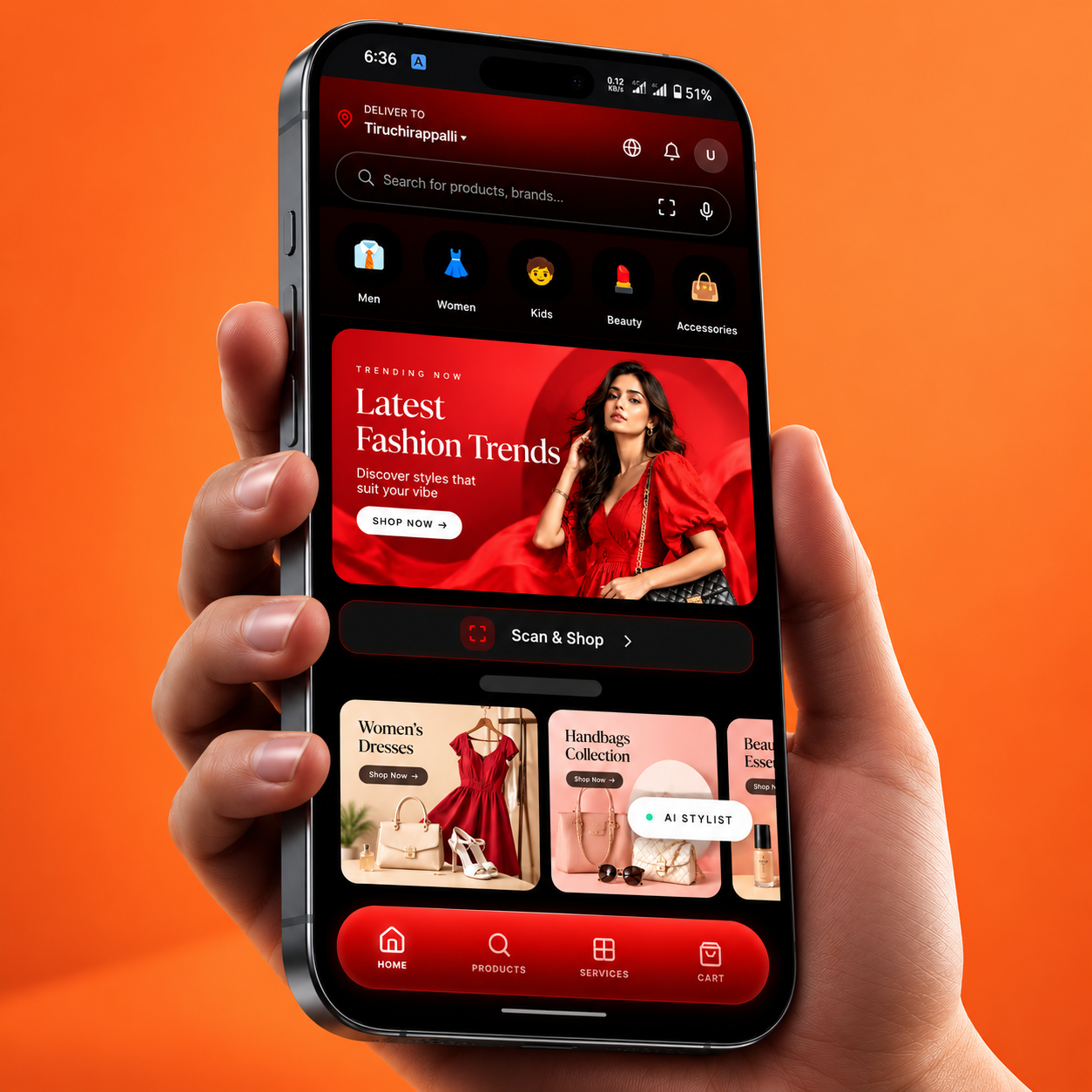
Real-time SKU catalog sync, UPI/card payment gateways, live order tracking, and push notifications—drawing from our in-house platform Fashyfi.

02Services

Booking & On-Demand Service Apps

Slot calendars, automated booking confirmations, push reminders, customer profiles, and provider dispatch views for clinics, salons and studios.

03Field Teams

Field Operations & Companion Apps

Offline order capture, attendance logging, barcode scanning, and auto-syncing records to central databases when connectivity returns.

04Portals

Customer Portals & Subscription SaaS

Secure multi-user applications where customers log in across mobile, tablet, or laptop to access digital content, service requests, and subscriptions.

05Admin Control

Centralized Admin Dashboards & APIs

Browser-based desktop workspaces for management to update catalogs, approve user requests, monitor activity, and manage permissions without touching code.

Architecture Selection

Choosing Your Technology Stack: Cross-Platform vs. Native.

We do not force every project into a single framework. During discovery, we help you select between cross-platform and native development based on your budget, timeline, and hardware requirements:

iOS
Android
Flutter
React Native
Swift
Kotlin
Firebase
AWS Cloud
Supabase
App Stores
Structured Lifecycle

How We Engineer, Test, and Launch Your Application

Building an application that survives real-world usage requires disciplined engineering before and after store submission. We follow a four-stage lifecycle:

01
Stage 01

Discovery, Scope Prioritization & Interactive Prototyping

02
Stage 02

Parallel Backend & Mobile App Engineering

03
Stage 03

Multi-Device QA, Security & Store Submission

04
Stage 04

Post-Launch Maintenance, Monitoring & User Acquisition

Transparent Pricing

What Drives Mobile App Development Cost in Trichy?

Two apps that look similar on a phone screen can require vastly different engineering effort behind the scenes. Instead of advertising misleading flat-rate packages that exclude the backend or admin panel, we provide transparent, scope-based proposals in Indian Rupees (INR) after reviewing your requirements.

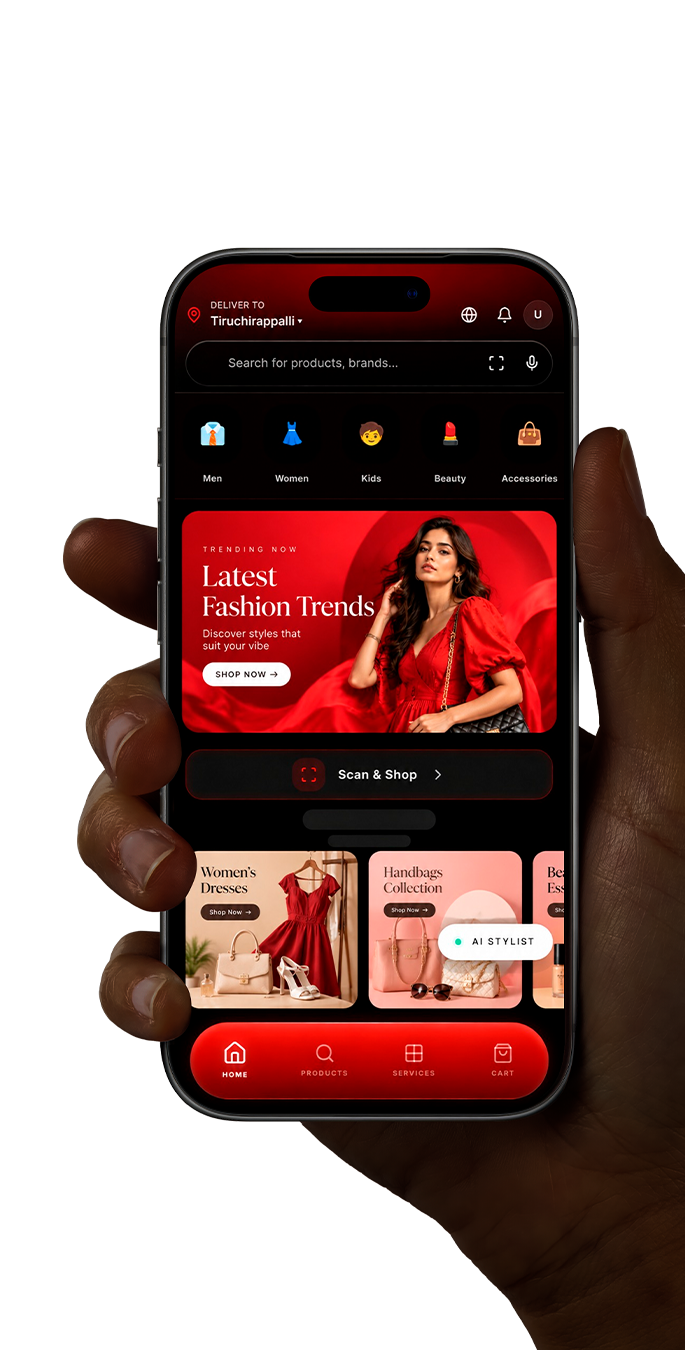
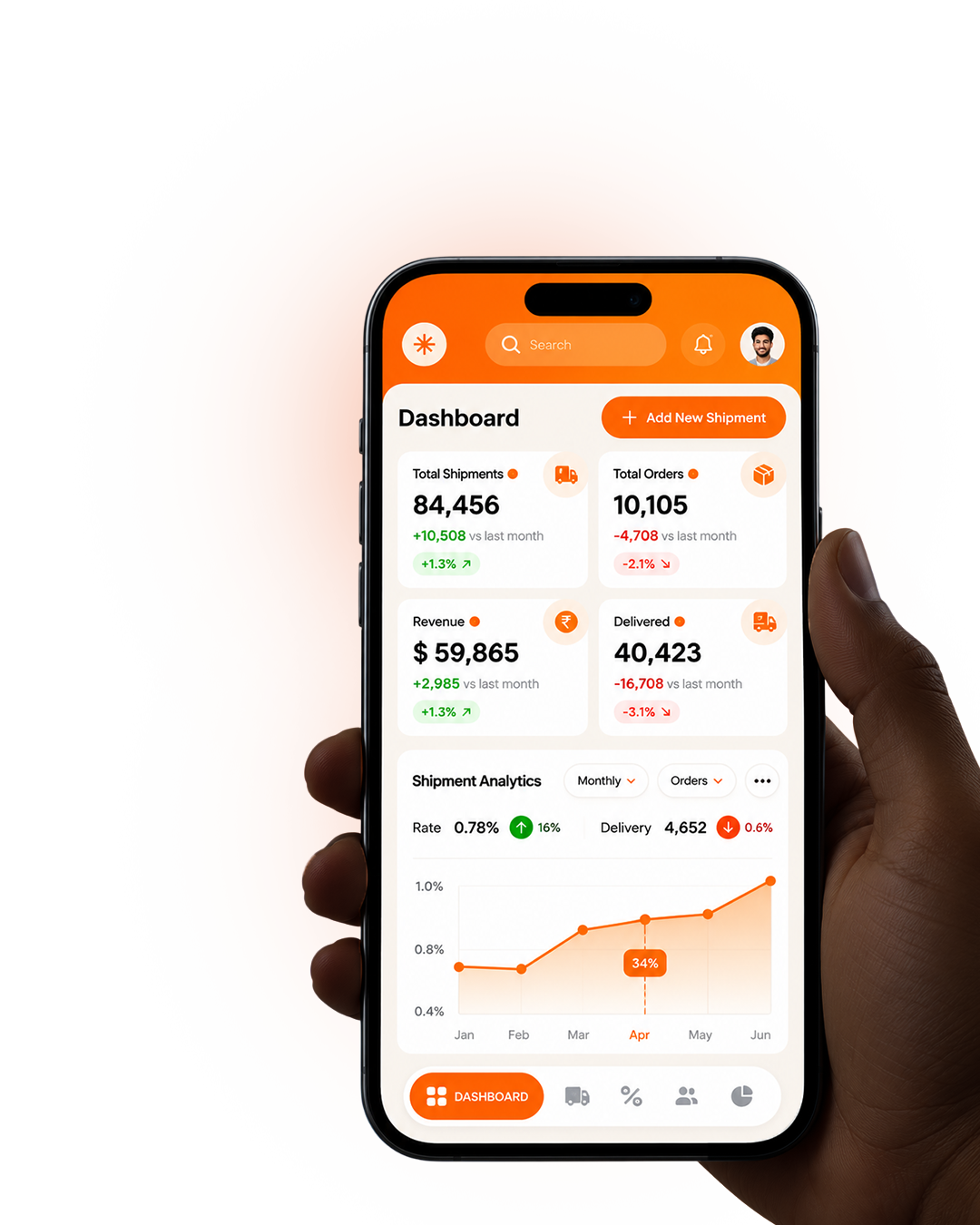
Mobile commerce application displayed on a smartphone
01 / Scope

Platform Scope

Launching on Android only, iOS only, or both platforms simultaneously (via Flutter/React Native or native builds).

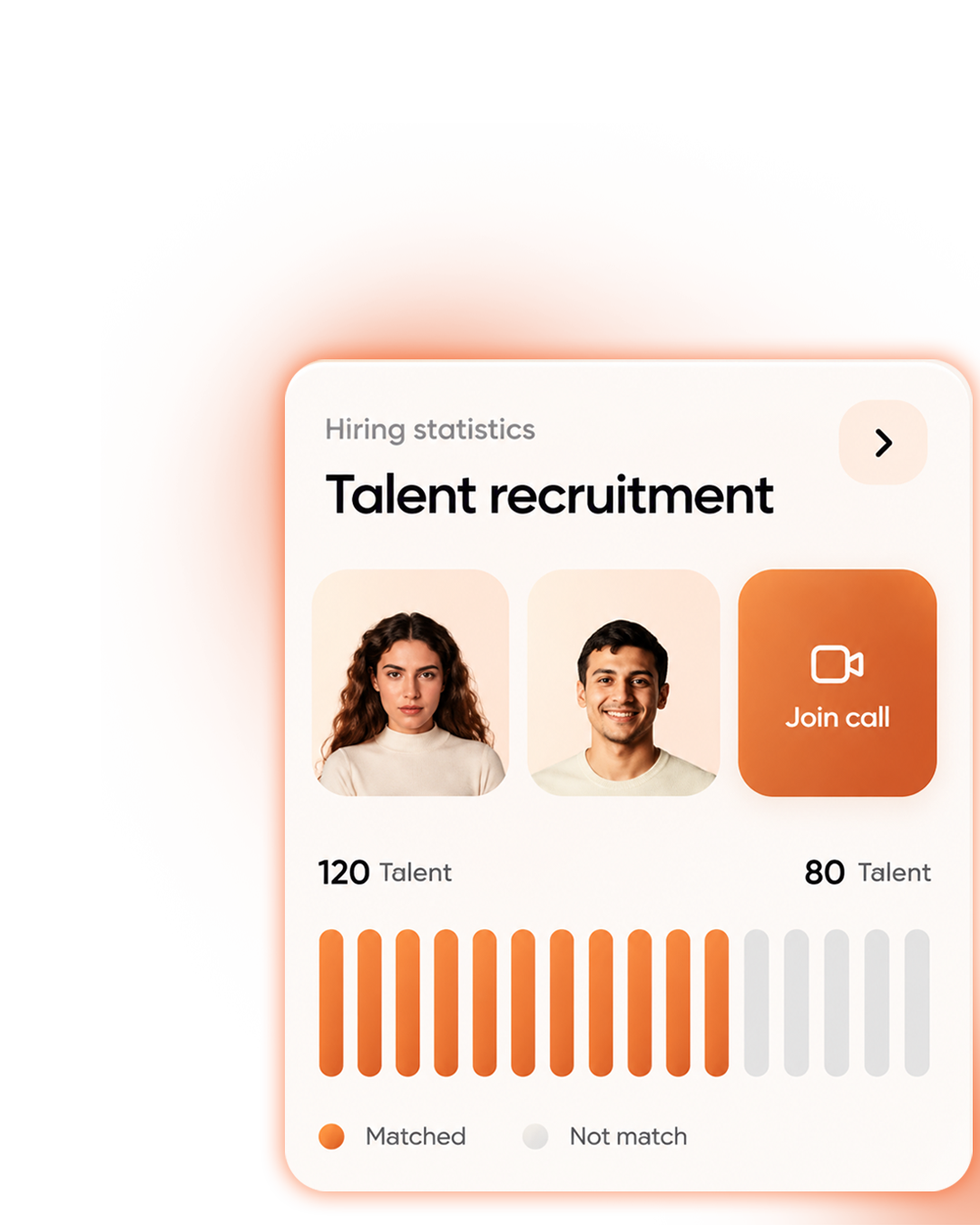
Business application interface with multiple user and recruitment views
02 / Architecture

Screen Complexity & User Roles

Whether the app has a single customer view or requires separate interfaces for customers, delivery/field staff, vendors, and back-office administrators.

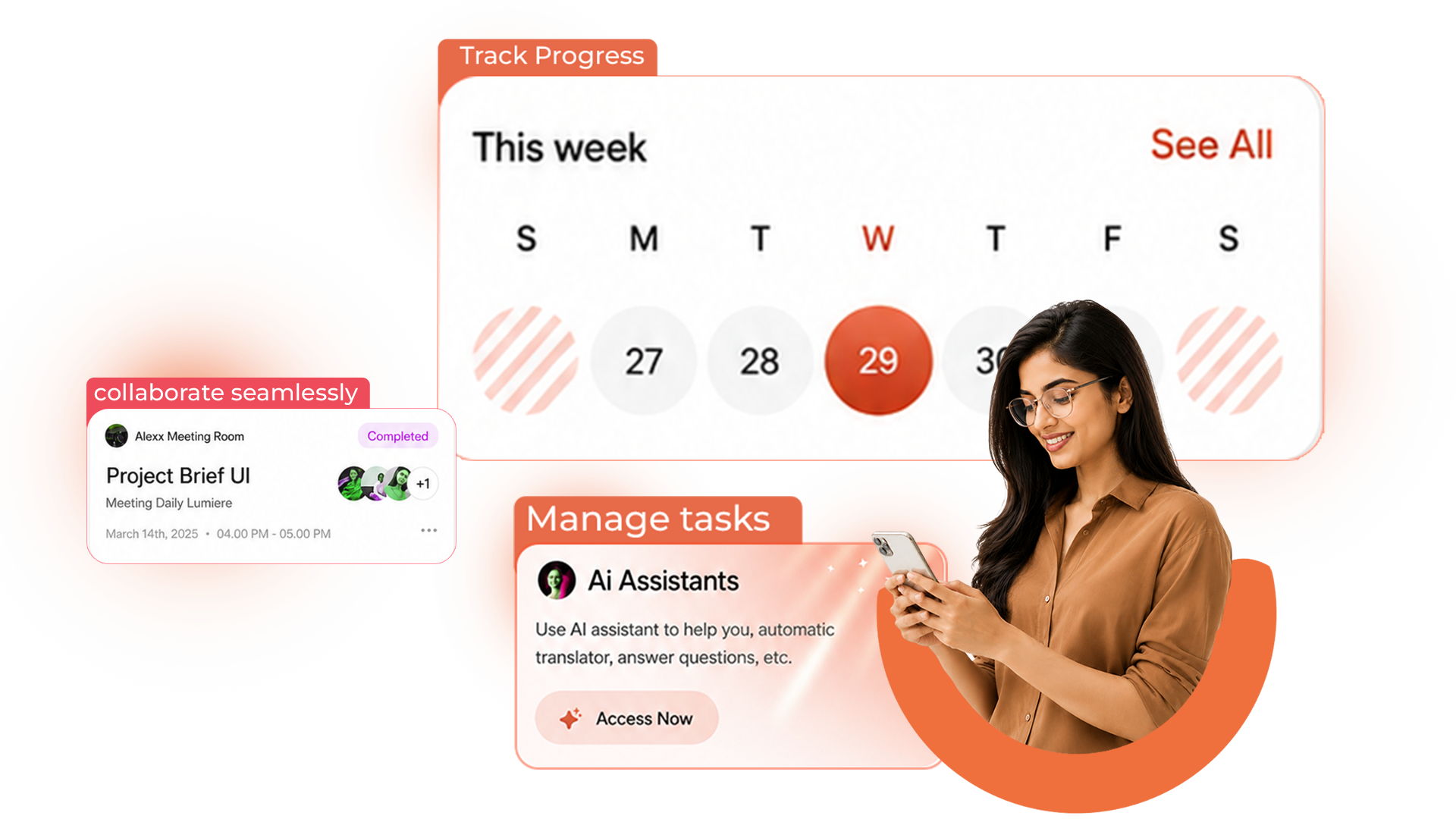
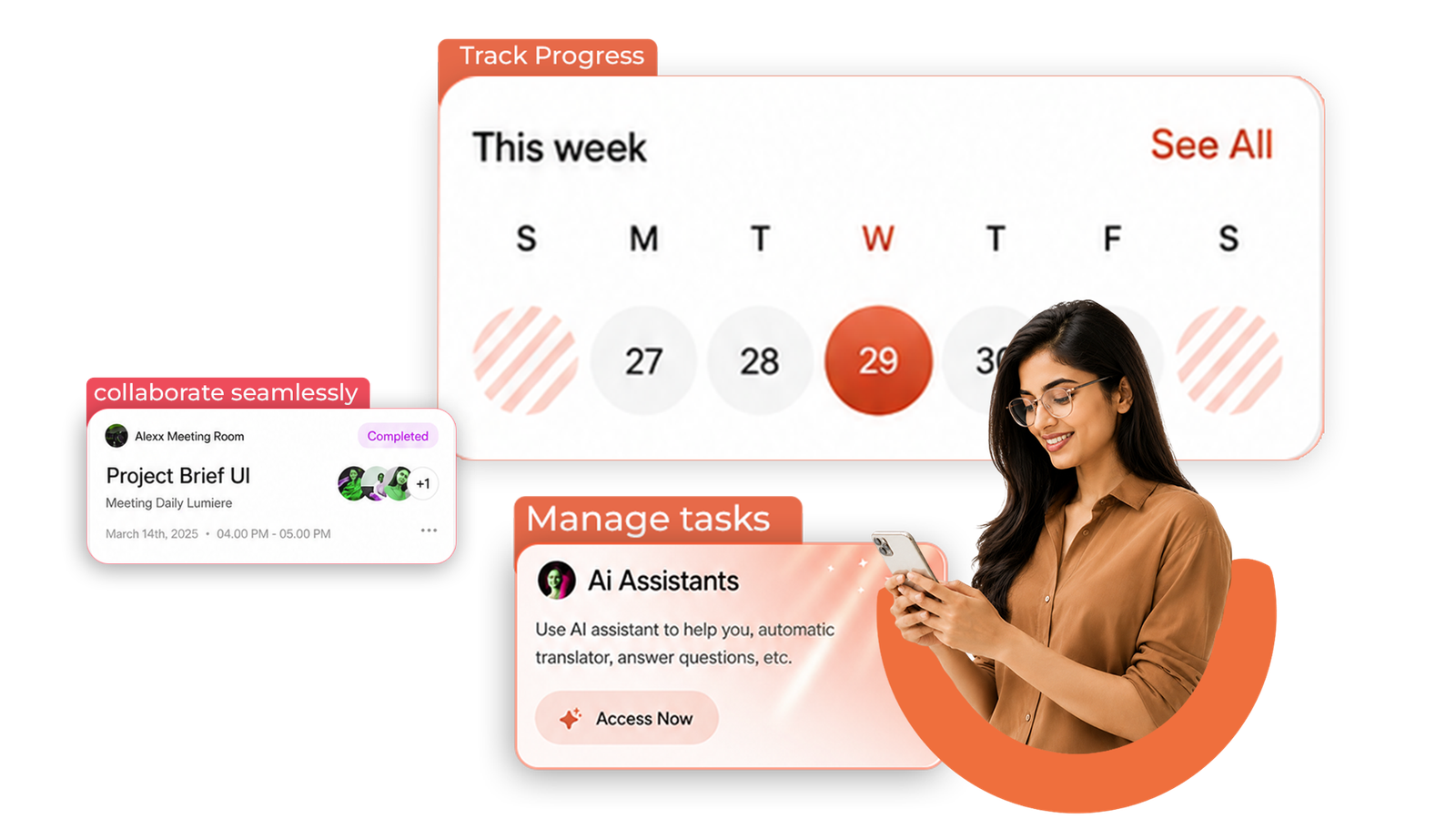
Connected client portal with progress, collaboration and task interfaces
03 / Integrations

Backend & Third-Party Integrations

Whether the app uses a streamlined cloud backend (Firebase/Supabase) or requires custom API connections to existing ERP/CRM software, payment gateways (UPI/cards), maps, or WhatsApp notifications.

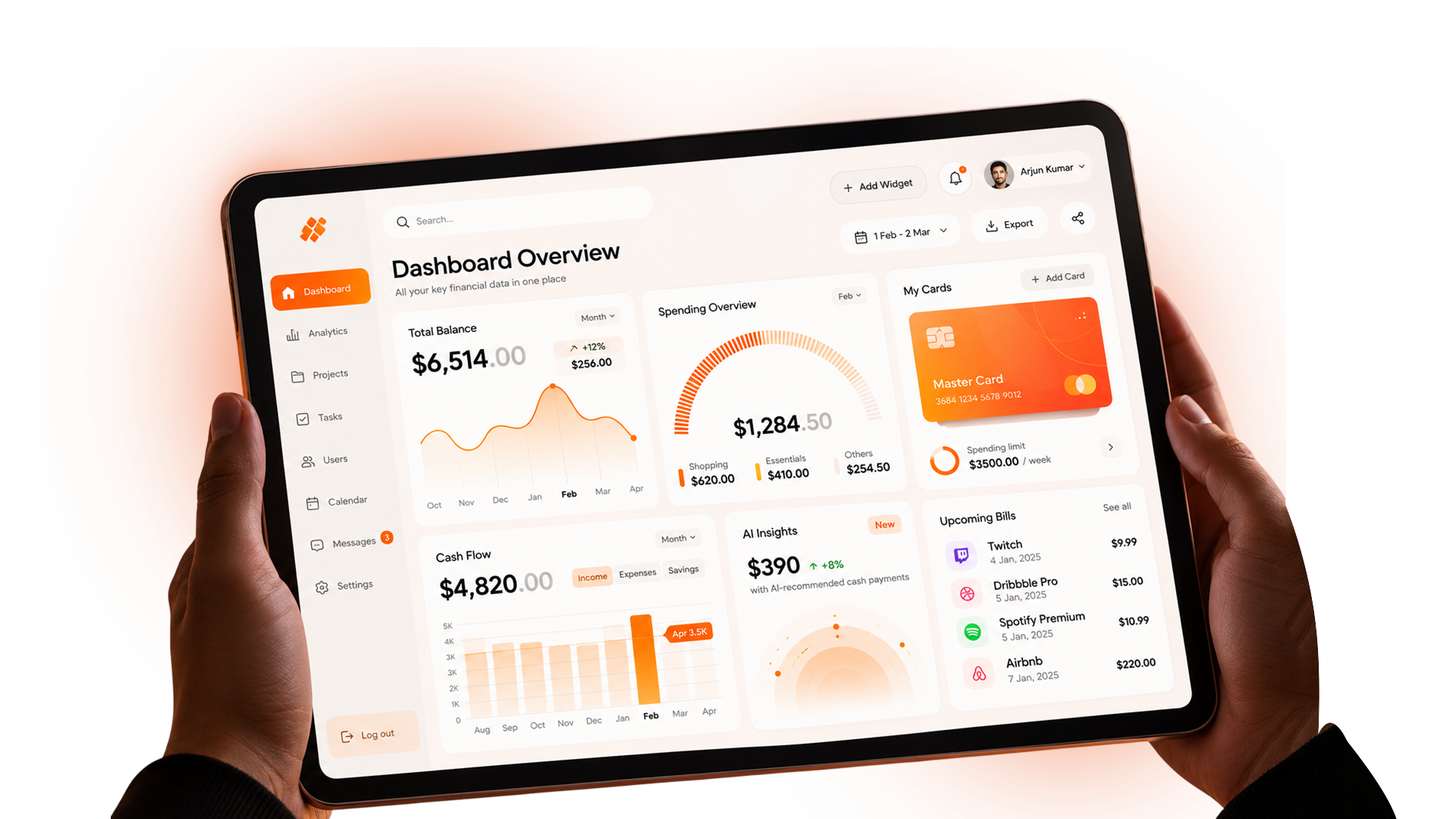
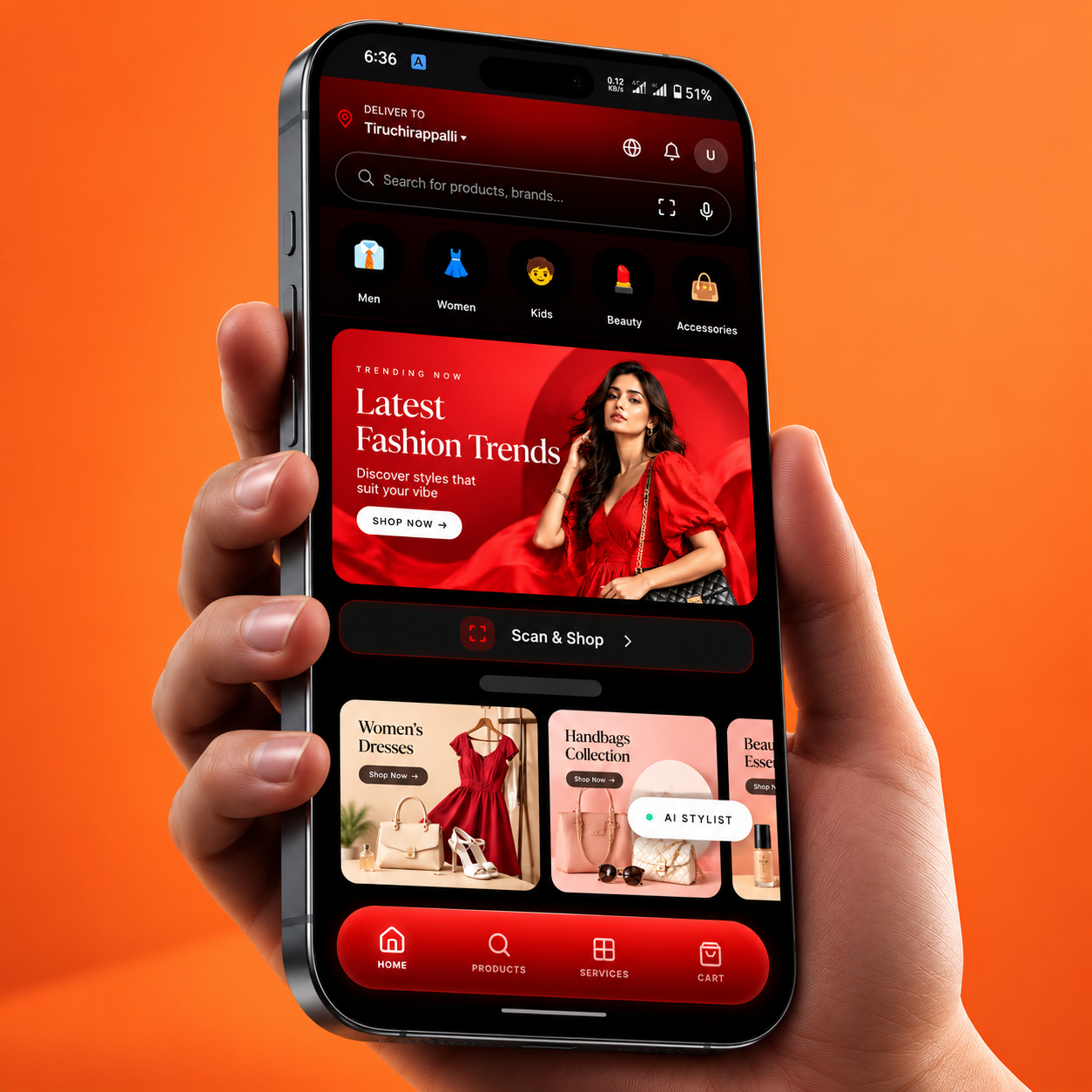
Smartphone application using scanning and device capabilities
04 / Hardware

Offline Sync & Device Hardware

Whether users need to record data offline and sync later, or interact with device cameras, barcode scanners, GPS routes, or biometric security.

Frequently Asked Questions

Mobile Application Development FAQs

Practical answers about choosing platforms, budgeting, app store publishing, integrations, and ongoing maintenance.

1. How do we know if our business needs a mobile app or just a mobile-friendly website?

If customers only visit your business occasionally to check information or send a one-off enquiry, a fast, mobile-responsive website is usually more cost-effective. A dedicated mobile application is worthwhile when customers or staff use the tool repeatedly—such as regular ordering, loyalty rewards, course access, or daily field reporting—or when your workflow requires push notifications, offline access, camera scanning, or GPS tracking.

2. Should we build a cross-platform app (Flutter or React Native) or separate native Android and iOS apps?

For most business, e-commerce, booking, and startup applications, cross-platform frameworks like Flutter or React Native are the most practical choice because a single codebase powers both Android and iOS, reducing build cost and simplifying future updates. We recommend native Kotlin (Android) or Swift (iOS) when an application depends heavily on specialized device hardware, complex background tasks, or OS-specific system integrations.

3. What determines the cost of mobile application development in Trichy, and how are projects quoted?

The cost depends on the number of user roles (e.g., customer app, field/partner app, and admin dashboard), the complexity of the backend database, third-party integrations (such as payment gateways or existing software), and whether you need Android, iOS, or both. After a discovery discussion, we provide a written proposal in Indian Rupees (INR) with applicable GST details, available either as a fixed-scope milestone project or a dedicated engineering team model.

4. Do you handle Google Play Store and Apple App Store submissions, and can the app connect to our existing software?

Yes to both. During planning, we review the API documentation of your current website, CRM, ERP, or accounting software to design secure data synchronization. At launch, our team prepares the production builds, configures store listings and privacy declarations, and manages the submission and review process for both the Google Play Store and Apple App Store.

5. What happens after our app is published, and why does a mobile app need ongoing maintenance?

Mobile operating systems (Android and iOS), third-party payment SDKs, and app store compliance rules update every year. Without periodic maintenance, an app can experience crashes on newer phones or face store removal. We offer ongoing post-launch support covering server and crash monitoring, OS compatibility updates, security patches, and phase-two feature enhancements.

Build With RiverBird

Ready to Build an Application
That Users Keep Installed?

Turn your customer experience or business workflow into a secure, responsive mobile application engineered around real daily operations.